Procedure First, Understanding Never: Why Skipping the 'Why' in Calculus Always Catches Up With You

There is a particular kind of confidence that calculus students develop early in the course. They learn the power rule, practice it fifty times, and begin to feel genuinely competent. Problems arrive, procedures activate, answers appear. It feels like mastery. For a while, it is enough.
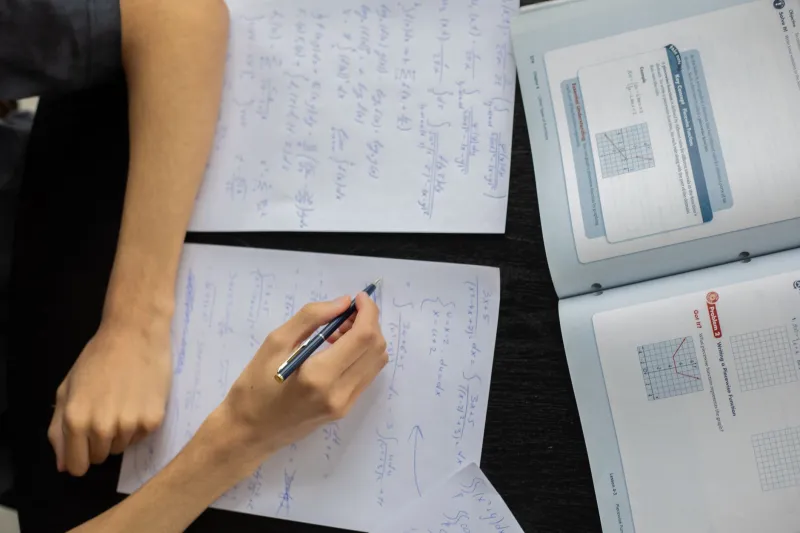
Then something changes. The problems grow more complex. Contexts shift. A question arrives that looks nothing like the worked examples in the textbook, and the procedures that once felt automatic suddenly offer no guidance at all. The student who felt so capable two weeks ago is now staring at a blank page, wondering what went wrong.
What went wrong, in most cases, is that procedural fluency was mistaken for understanding—and the two are not the same thing.
The Difference Between Knowing How and Knowing Why
Procedural fluency refers to the ability to execute a mathematical process accurately and efficiently. A student with strong procedural fluency can differentiate a composite function using the chain rule without hesitation. They follow the steps, apply the notation correctly, and arrive at the right answer.
Conceptual understanding, by contrast, refers to the ability to explain why that process works, to recognize when it applies, and to adapt it when the standard form is absent. A student with genuine conceptual depth understands that the chain rule exists because of how rates of change compose—that when one quantity depends on another, which itself depends on a third, the rates multiply in a specific and meaningful way.
These two forms of knowledge develop on different timelines, and that gap is not a flaw in the learning process. It is a feature of how the human brain builds mathematical understanding.
The Cognitive Science Behind the Gap
Researchers in mathematics education have long observed that students can perform procedures correctly while holding fundamentally incorrect or incomplete conceptual models. This phenomenon, sometimes described as instrumental understanding versus relational understanding, is particularly pronounced in calculus because the subject introduces abstract ideas—limits, infinitesimals, rates of change—that have no direct analog in earlier mathematics.
When a student learns a procedure without the underlying reasoning, the brain stores it as a pattern-matching routine. Given input A, produce output B. This works reliably in familiar contexts. But pattern-matching routines do not transfer well. When the input changes in an unexpected way, the routine fails, and the student has no conceptual scaffold to fall back on.
Building genuine conceptual understanding requires a different kind of cognitive work. It demands that the learner construct mental models, test them against examples, encounter contradictions, revise, and rebuild. This process is slower, more effortful, and frequently uncomfortable. It also produces knowledge that is durable, flexible, and genuinely useful across novel problem types.
Why Students Default to Procedure—And Why That's Understandable
It would be unfair to simply blame students for prioritizing procedures. The incentives in most calculus courses push strongly in that direction. Homework assignments reward correct answers, not correct reasoning. Timed exams favor speed, which favors practiced routines. When a student has forty problems due tomorrow, spending an hour trying to understand why the limit definition of the derivative produces the power rule feels like a luxury they cannot afford.
This is a rational short-term response to real academic pressure. The problem is that it systematically underinvests in the kind of understanding that pays dividends later—in multivariable calculus, in physics, in engineering coursework, and in any context where calculus is applied rather than merely performed.
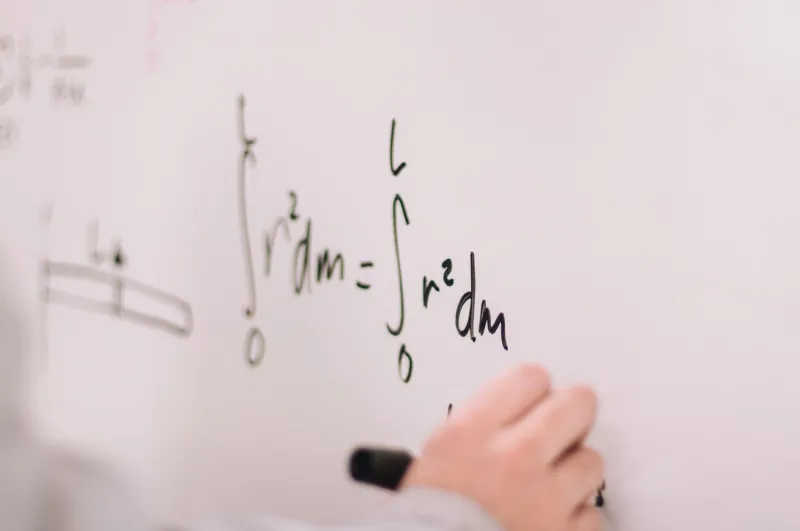
The student who rushed through single-variable calculus on procedural autopilot often arrives at their sophomore-year courses with a significant hidden deficit. They can integrate by parts. They cannot explain what an integral represents well enough to set one up from a real-world description.
A Framework for Knowing When to Go Deeper
This does not mean every student in every situation must pursue the deepest possible conceptual understanding of every topic. The appropriate depth of understanding depends on your specific goals, and being strategic about that is itself a form of mathematical maturity.
Consider the following framework when deciding how deeply to pursue the reasoning behind a concept:
Ask where this concept appears downstream. Foundational ideas—limits, the definition of the derivative, the relationship between integration and accumulation—appear everywhere in subsequent coursework. Investing heavily in understanding these pays compounding returns. A niche technique encountered once on a problem set may not warrant the same investment.
Ask whether the procedure is transferable without the concept. If you can apply a technique only when the problem looks exactly like the template you practiced, your understanding is fragile. Test yourself by asking: could I explain to someone else why this works? Could I apply it in a context I have never seen before? If the answer is no, deeper engagement is warranted.
Ask what your goals actually require. A student preparing for a single AP exam has different needs than a student planning to major in mechanical engineering. Both need procedural fluency. The engineering student needs considerably more conceptual depth, because their future coursework will demand it. Being honest about your goals is not an excuse to avoid understanding—it is a tool for allocating limited study time effectively.
The Long Game in Calculus Learning
There is a reason that the most experienced calculus instructors consistently emphasize reasoning over rote execution. It is not because procedures are unimportant—they are essential. It is because procedures without understanding are a ceiling, not a foundation.
Students who invest time in understanding why differentiation rules work, why the Fundamental Theorem connects two seemingly unrelated operations, and why limits behave the way they do near discontinuities are building something that cannot be disrupted by an unfamiliar problem format. Their knowledge is structural, not decorative.
This investment takes longer. It involves sitting with confusion, revisiting definitions, and occasionally feeling less productive than the student next to you who is blazing through practice problems. That discomfort is not a signal that you are doing it wrong. It is a signal that you are doing the harder and more important work.
Slowing Down in the Right Places
Practical mastery of calculus is not achieved by choosing between understanding and procedure—it requires both, developed in the right order and proportion. The most effective approach is to pursue conceptual clarity on foundational material before drilling procedural fluency, because fluency built on a solid conceptual base is faster to acquire and more resistant to decay.
When you encounter a new concept, resist the impulse to immediately locate the formula and begin practicing. Spend time with the definition. Ask what problem this concept was invented to solve. Trace the reasoning that connects the definition to the technique. Then practice.
You will find that the practice goes faster, the retention lasts longer, and the inevitable moment when the problem looks nothing like what you expected becomes far less frightening.
Understanding the why takes longer. It is also, without question, the point.