Catching Calculus Errors Before They Cost You: A Step-by-Step Diagnostic Guide for Derivative Problems
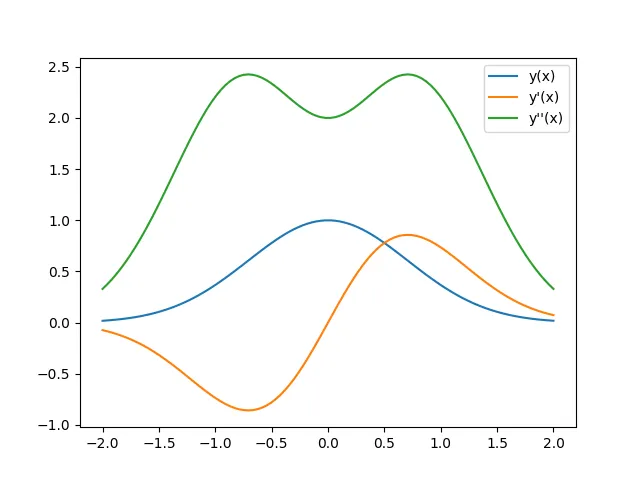
Photo: Ewoutvelde, CC BY-SA 4.0, via Wikimedia Commons
There is a particular frustration reserved for students who study diligently, understand the material conceptually, and still lose significant points on a calculus exam. More often than not, the culprit is not a gap in knowledge—it is a small, systematic error that repeats itself across multiple problems. The encouraging news is that these mistakes follow predictable patterns. Once you learn to recognize them, you can catch them yourself before your professor ever sees your work.
This guide identifies the most common derivative errors observed in undergraduate calculus courses across the United States, explains precisely why each error occurs, and provides a practical checklist you can apply during any exam.
The Chain Rule: The Most Misapplied Tool in Calculus
Ask any calculus instructor which rule students misuse most frequently, and the answer is almost always the chain rule. The chain rule states that if you have a composite function f(g(x)), its derivative is f′(g(x)) · g′(x). That second factor—the derivative of the inner function—is the piece students most often forget.
Consider the function h(x) = sin(3x²). A student in a hurry might write h′(x) = cos(3x²) and stop there. This answer is incomplete. The inner function is 3x², and its derivative is 6x. The correct answer is h′(x) = cos(3x²) · 6x.
Diagnostic habit: After differentiating any composite function, ask yourself explicitly: "Did I multiply by the derivative of what is inside?" Make this a verbal checkpoint, not just a mental one.
A subtler chain rule error appears with exponential functions. Students frequently differentiate e^(x²) as simply e^(x²), forgetting that the exponent itself must be differentiated. The correct derivative is e^(x²) · 2x. Because e^u differentiates so cleanly to itself, it is easy to feel as though the work is complete when it is not.
Treating Constants as Variables (and Vice Versa)
Constants cause a surprising number of errors, particularly when they appear in unfamiliar positions. Consider the function f(x) = 5^x. Many students instinctively apply the power rule and write f′(x) = x · 5^(x-1)—a completely incorrect application. The power rule applies when the base is a variable and the exponent is a constant, not the reverse. The correct derivative of 5^x is 5^x · ln(5).
Conversely, when a constant appears as an additive term, students sometimes attempt to differentiate it unnecessarily, introducing errors into otherwise correct work. The derivative of f(x) = x³ + 7 is simply 3x². The constant 7 vanishes. Attempting to carry it forward in derivative notation is harmless only until it begins to interact with other terms.
Exam tip: Before beginning any derivative problem, underline every term and label it: is this term a variable expression, a constant, or a composite? This thirty-second investment prevents a category of errors that costs students points repeatedly.
Product Rule Errors: The Forgotten Second Term
The product rule—d/dx[f(x)g(x)] = f′(x)g(x) + f(x)g′(x)—requires you to differentiate each factor once while holding the other constant, then sum the results. Students who are fatigued or working quickly frequently write only the first term: f′(x)g(x). The second term, f(x)g′(x), gets dropped entirely.
This error is especially common when one factor of the product is a polynomial that differentiates to a simple constant. Consider y = x² · sin(x). The derivative is 2x · sin(x) + x² · cos(x). If a student differentiates the polynomial factor and obtains 2x, the problem can feel resolved before the sine factor has been addressed.
Visual check: Write the product rule formula at the top of any problem that involves two functions multiplied together—even if you believe you know it from memory. Seeing both terms written out forces you to address each one.
Implicit Differentiation: Forgetting dy/dx After Differentiating y
In implicit differentiation, every term containing y must be differentiated with respect to x using the chain rule, which means attaching a dy/dx factor to each such term. Forgetting this factor is the single most common error in implicit differentiation problems.
For example, differentiating x² + y² = 25 yields 2x + 2y · (dy/dx) = 0. Students who omit the dy/dx factor write 2x + 2y = 0, which is an equation in two variables rather than an expression that can be solved for the derivative.
This error is especially difficult to catch during an exam because the resulting algebra still proceeds smoothly—it simply produces a wrong answer. The absence of dy/dx does not create an obvious obstruction.
Diagnostic habit: After differentiating any implicit equation, scan each term and verify that every y-term carries a dy/dx. Treat this as a mandatory proofreading step, not an optional one.
Quotient Rule Sign Errors and Order Sensitivity
The quotient rule, d/dx[f/g] = (f′g − fg′) / g², is order-sensitive in its numerator. The derivative of the numerator function must come first. Students who reverse this order—writing fg′ − f′g—introduce a sign error that flips the result entirely.
Because the quotient rule is more cumbersome than the product rule, many instructors encourage rewriting division as multiplication: f/g = f · g^(−1). Applying the product rule to this form can reduce sign errors and simplify bookkeeping.
Building a Pre-Submission Checklist
The most effective way to apply these diagnostic habits under exam conditions is to construct a brief checklist and run through it before submitting any derivative problem. The following questions take fewer than two minutes to answer:
- Did I identify every composite function and apply the chain rule completely?
- Did I correctly distinguish between variable bases with constant exponents (power rule) and constant bases with variable exponents (exponential rule)?
- If a product is present, does my answer contain two terms?
- If I used implicit differentiation, does every y-term carry a dy/dx factor?
- If I used the quotient rule, is the numerator in the correct order?
Printing or writing this checklist at the top of your scratch paper before an exam begins is a concrete, low-effort strategy that has helped students at every level improve their scores.
The Larger Lesson: Errors Are Systematic, Not Random
Calculus mistakes rarely appear in isolation. A student who forgets the chain rule once will typically forget it in every problem where it applies. This is not a sign of carelessness—it is a sign that the underlying habit has not yet been formed. The goal of this diagnostic approach is to convert unconscious errors into conscious checkpoints, and eventually into automatic habits.
Practice not only by solving problems, but by reviewing your own work with the specific question: where, precisely, could I have made an error? The student who can answer that question reliably is the student who earns the grade their preparation deserves.